
Crawford 72-Hour Release Reality
No official Crawford County 72-hour release feed was found in the sheriff-linked jail population report. The visible tools are Current Inmates, 24 Hours Arrests, and Inmates by Arrest Date. There is no captured tab labeled Recent Releases, 72 Hour Release, or Inmates Released Last 72 Hours, so a rolling list cannot be inferred from an arrest-date sort. The difference is more than a label. Current Inmates describes people still publicly listed in Crawford County custody. The 24-hour view describes new bookings, and its sampled entries say “CURRENTLY BOOKED.” Inmates by Arrest Date sorts current records by the day custody began. None states when a booking ended. The report also gives no release-record retention period and no fixed update schedule. A person who disappears may have entered the community or moved to another authority. The roster, sheriff release entry, court action, and any receiving system must be compared before that change is classified. Name filters narrow the displayed jail population, but they do not reveal prior releases. That distinction keeps current custody separate from a past release event.
The official Crawford County current-inmate report is the documented public online roster used to begin that three-day release verification timeline.
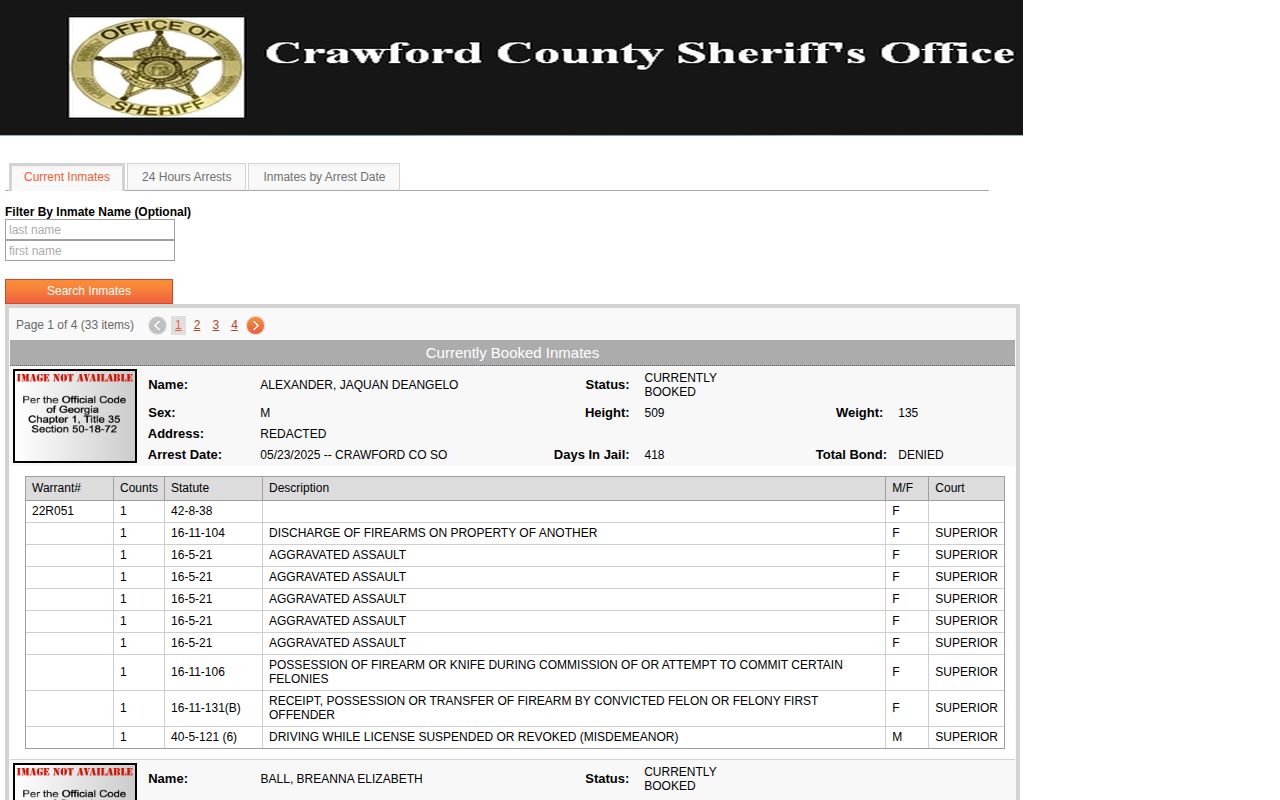
The roster can establish current public status, but it cannot supply Crawford County's missing three-day release history on its own.
Build Crawford Three-Day Release Records
A useful three-day check records what each official source says and when it was checked. Start with the name exactly as it appears in the Crawford County report. Save the arrest date, arresting agency, court, charges, warrant number, and bond shown for the matching booking. The report may also show current status, physical descriptors, days in jail, counts, statutes, and an offense marker. These fields help distinguish people with similar names and connect the inquiry to the right arrest. They do not show the release event. That must come from the sheriff record, supported by the court action or receiving system that explains what happened next.
- Search Current Inmates. A match means the person is still publicly listed in the Crawford jail.
- Review 24 Hours Arrests for a booking near the start of the period. Do not treat that booking tab as a release report.
- Use Inmates by Arrest Date only to organize people who remain in the public report. It is not a prior-release archive.
- Check Georgia VINE for a matching custody change and any registered alert tied to the person.
- Ask the Crawford sheriff's records clerk for release date, time, reason, and transfer destination for the identified booking.
- Match the result to the court or receiving system so bond-out, time served, supervision, and transfer are not confused.
Keep the official source results separate. A roster disappearance says the person is no longer publicly listed as currently booked in Crawford County. A sheriff release entry says when and why the local booking ended. A court record identifies the bond, dismissal, sentence, probation order, revocation result, or other legal action behind the change. GDC, another jail, BOP, or ICE may show that confinement continued after a transfer. Georgia VINE can support a release or custody-change timeline when the agency participates, but it is not the full jail file. Matching those sources prevents a transfer from being reported as release to the community.
Note: Record the date and time of each check because the public sheriff report does not publish its update cadence.
Crawford 72-Hour Release Fields
A true Crawford County three-day release list would need an event date and release reason. Those fields are not present in the captured public roster. The visible data instead describe the current booking: name, status, arrest date, agency, days in jail, bond, warrants, counts, statutes, charges, and court. They help identify the correct person and jail event for a records request. They should not be relabeled as release information. In particular, days in jail is a current custody-duration field rather than a scheduled release date, and total bond does not show that bond was posted or that the person left the facility.
| Field | Use in a three-day Crawford check |
|---|---|
| Name and current status | Matches the person and shows whether the report still labels the booking current. |
| Arrest date and agency | Places the start of custody and identifies the arresting office. |
| Days in jail | Shows current custody duration, not the day a future or past release occurred. |
| Bond | Shows the listed total but not whether it was posted or caused release. |
| Warrant, counts, and statute | Links the booking to listed allegations and helps distinguish similar names. |
| Charge and court | Points toward the court record that may explain the custody change. |
| Release date, time, and type | Not shown in the captured interface; request these from sheriff records. |
| Destination agency | Not shown as a release field; needed to distinguish community release from transfer. |
The Crawford County release request should be narrow. Identify the full name, date of birth when known, arrest date, listed charges, and booking number if available. Then request the booking sheet, exact release date and time, release reason or type, bond record if relevant, court-order reference, and any transfer or detainer destination. Ask whether the person left for the community or remained confined by another authority. If the answer is “transferred,” request the receiving agency's name. A GDC transfer leads to the state offender search, while federal or immigration custody requires the matching federal source. That answer determines the next search and prevents a local roster change from being overstated.
Crawford Weekend Release Records
A three-day window is useful around weekends and holidays because it spans more than one calendar day. Crawford County does not publish a procedure stating that releases occur at set times, nor does it publish a rule that delayed entries roll into a later list. Avoid assuming either. Court action, bond processing, sentence completion, and hold clearance can each affect when the jail physically ends custody. For the most recent day inside the period, the Crawford County 24-Hour Release List process explains why the local 24-hour tab covers bookings rather than releases. The wider workflow adds date-by-date comparison and a records request, not a nonexistent release feed.
The practical method is to compare the last known current status with the first confirmed custody change. If a person appeared Friday and was gone Monday, that gap narrows the inquiry but does not produce an exact release date. Ask the sheriff for the event time. Check the Crawford Superior Court source for a bond, dismissal, sentence, probation, revocation, or modification order within the same span. A court order can explain authority for release even when it does not record the jail-door time. VINE may show a custody change, and a receiving agency can establish that a transfer continued confinement. Together, those records can close the gap without inventing a weekend update schedule.
Crawford Release Outcome Checks
Leaving the Crawford County roster does not always mean release to the community. A person may bond out, finish time served, complete a sentence, or leave under a court order. Bonded out means a bond condition was met while the case may remain pending. Time served means the jail term ended through sentence completion or credit already earned. The same roster change can occur when the jail transfers someone to GDC, another county, federal custody, ICE, a medical facility, or another lawful destination. A three-day list without a destination field would blur community release and continued confinement, so the sheriff record must identify the outcome.
| Possible outcome | Record that confirms it |
|---|---|
| Bond or court release | Sheriff release entry plus the applicable Crawford court order |
| Time served or sentence completion | Jail release entry and sentence or disposition record |
| GDC transfer or state release | GDC offender search plus Crawford court records |
| Parole or felony probation | Parole Board or DCS status plus sentencing records |
| Federal or immigration transfer | BOP, ICE, federal case, or the receiving authority named by the sheriff |
Use GDC only for a state-custody path. A person who spent time solely in the Crawford County jail and then bonded out may not have a GDC record. Georgia VINE can help show a release, transfer, or other custody change for participating agencies, yet it does not replace the full sheriff release sheet. Crawford court records can explain the order that authorized bond, dismissal, probation, sentence completion, or another result, but the sheriff remains the source for the local physical release event. For a state transfer, compare GDC information with the local sentence. For a federal or immigration transfer, use the receiving authority identified in the release record.
Note: “Released from Crawford County custody” may still mean transfer into another agency's custody rather than release to the community.
Crawford Release Roster Quirks
Crawford County's interface creates a distinctive data trap. Its 24-hour label sits beside current-inmate tools, but that tab says “Inmates Booked Last 24 Hours.” The sampled status remains “CURRENTLY BOOKED.” Someone scanning only the number in the tab name could mistake a recent arrest feed for a recent release feed. The words Arrests and Booked resolve the ambiguity. The Inmates by Arrest Date view presents a second trap. Sorting by admission date is useful when a name or custody start is known, yet it does not preserve former inmates as a historical release list. The research capture of that specific page failed, so no image from the failed manifest row belongs here. The successfully captured Crawford County current roster is the matching evidence for the active-custody structure.
Retention remains unknown. The Crawford County sheriff report does not state whether a released record persists for minutes, days, or not at all, and it does not publish an archive rule. Do not estimate a three-day release list by assuming names remain online. Instead, save the identifying booking facts while they are visible and give them to the records clerk. Ask for the exact release date, time, reason, and destination. If a receiving agency is named, verify the next custody status there. This approach uses the roster for identification and the release entry for the event each source can actually prove.
Request Crawford Three-Day Records
The official Crawford Records Clerk page identifies the local open-records channel. Sheriff Lewis S. Walker leads the Crawford County Sheriff's Office, and the records clerk maintains the office's open records. Send a clear date range covering the three days at issue, but tie the request to one named person and booking whenever possible. Include the date of birth or booking number when known, plus the arrest date, arresting agency, court, and charges. Those details distinguish the specific Crawford County release record from an earlier booking. Ask whether the booking ended during that range and request the booking sheet, release date, time, reason, and receiving agency. The office is at 21 Hortman Mill Road, Knoxville, GA 31050, and its main number is (478) 836-3116. No Crawford County fee for this release record was located. Georgia open-records guidance states that records should be produced within a reasonable time not exceeding three business days unless unavailable in that period. The agency must also address a cost estimate above $25 within the stated response framework. A narrow request reduces confusion with an earlier arrest or later rebooking.
Use the court named in the booking to confirm the legal basis for the Crawford County release. Superior Court handles felony cases, while Magistrate Court can supply warrant, first-appearance, and bond context where applicable. Request the order or docket entry that matches the sheriff's release reason, such as bond, dismissal, sentence, probation, revocation, or modification. Court records often explain why custody changed, though they may not state the exact time the person left the jail. For a broader named-person search that may continue beyond the three-day span, use the Crawford County release record and search workflow. Exact local release details still come from the sheriff's booking-release record.
Note: Give the arrest date and listed court with the request so staff can locate the correct Crawford County booking.